Angling near Thorsminde Camping
Here you can enjoy yourself with other anglers
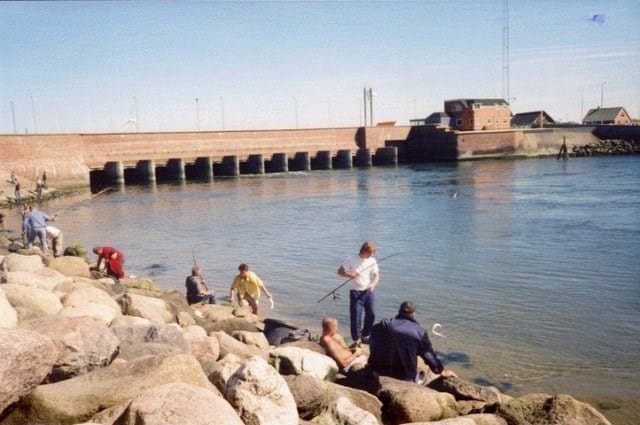
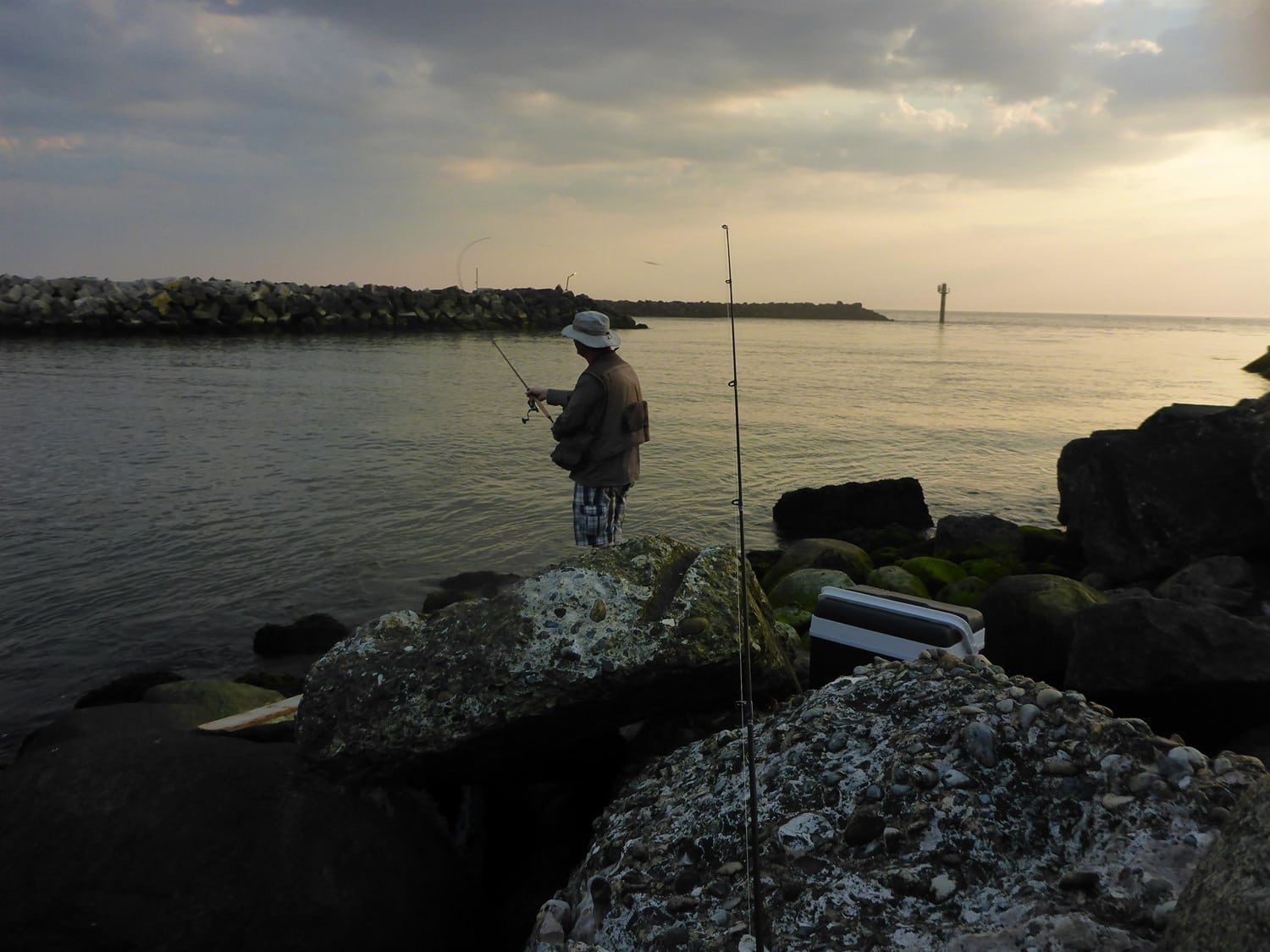
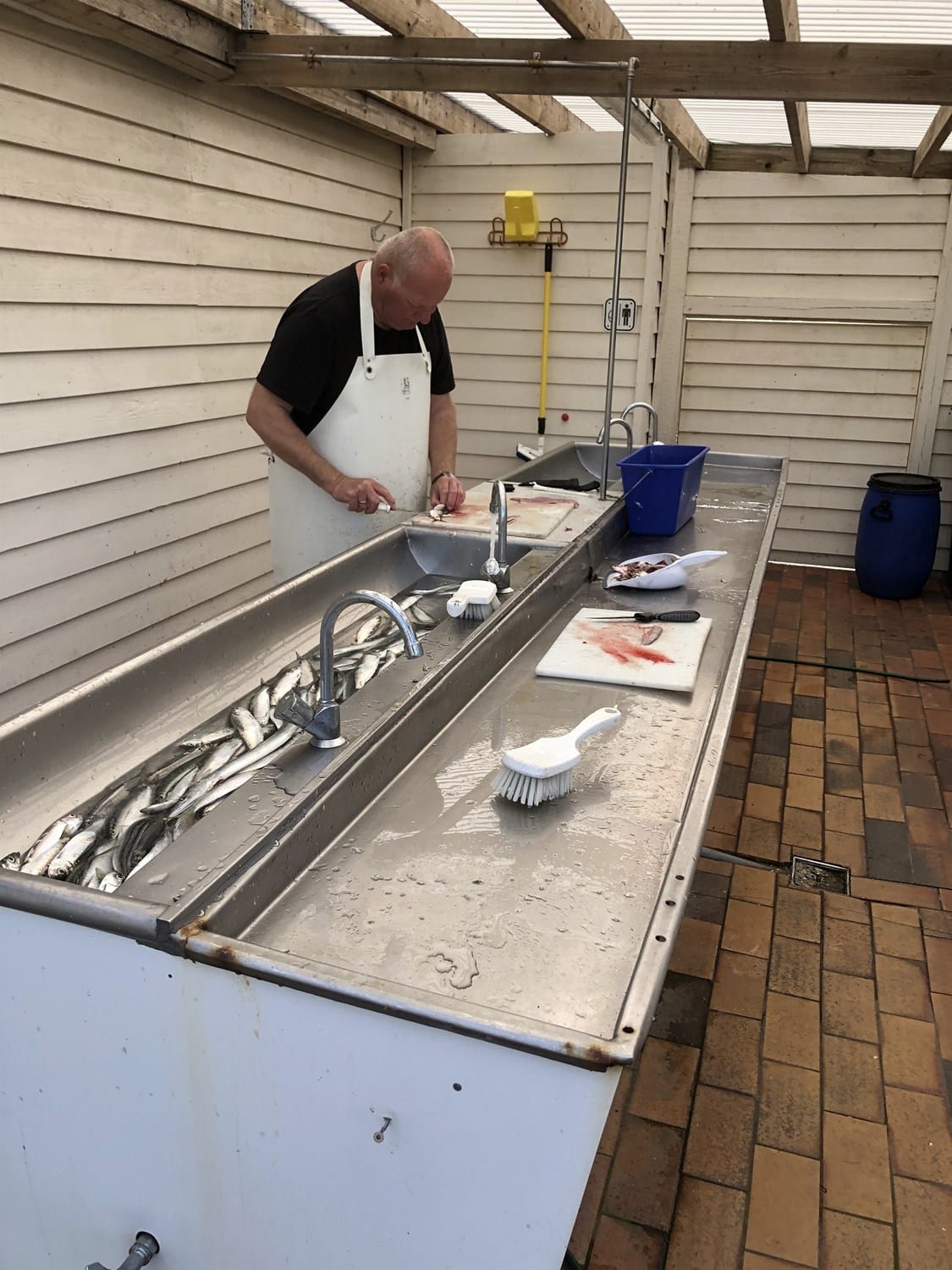
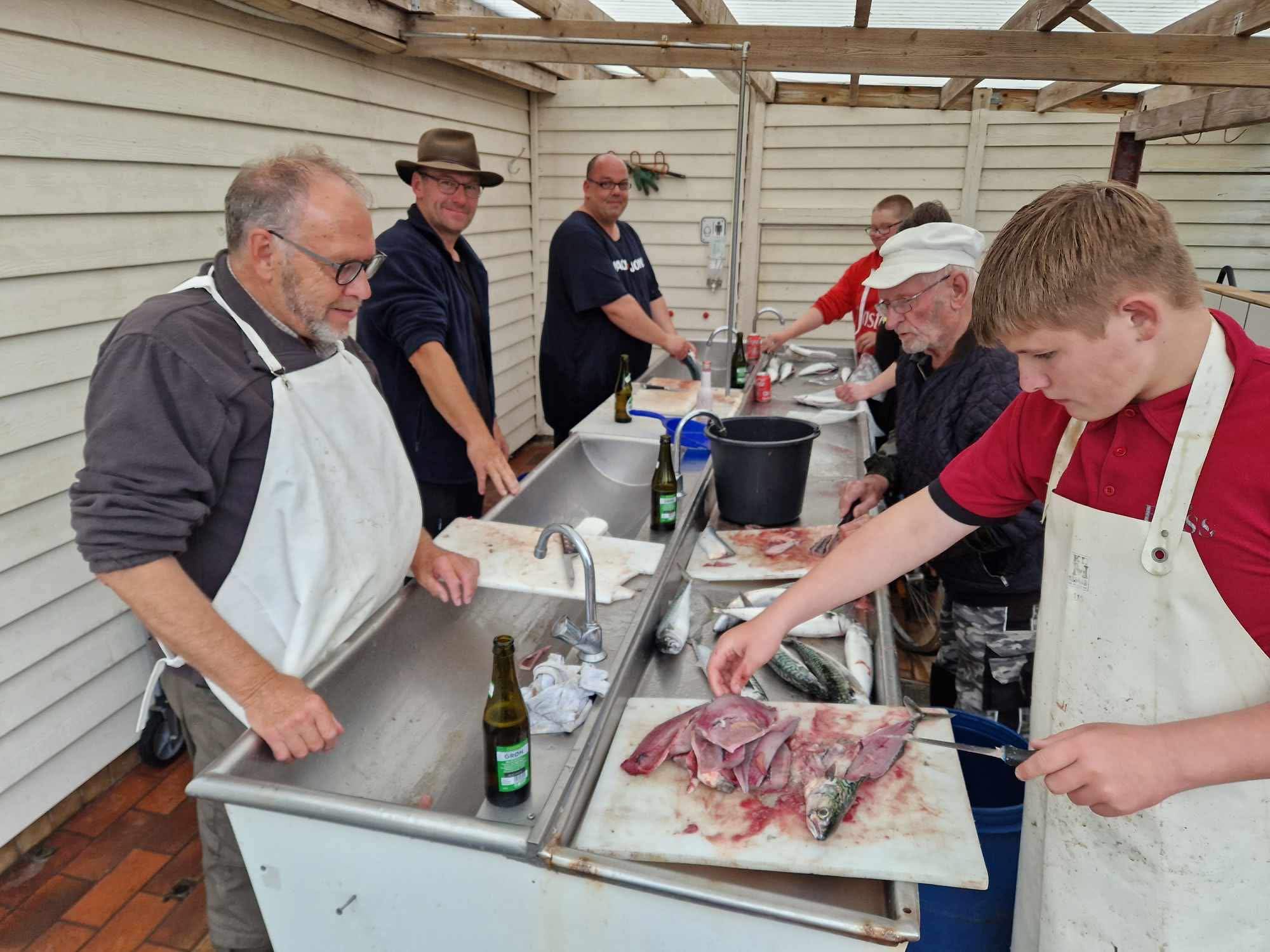
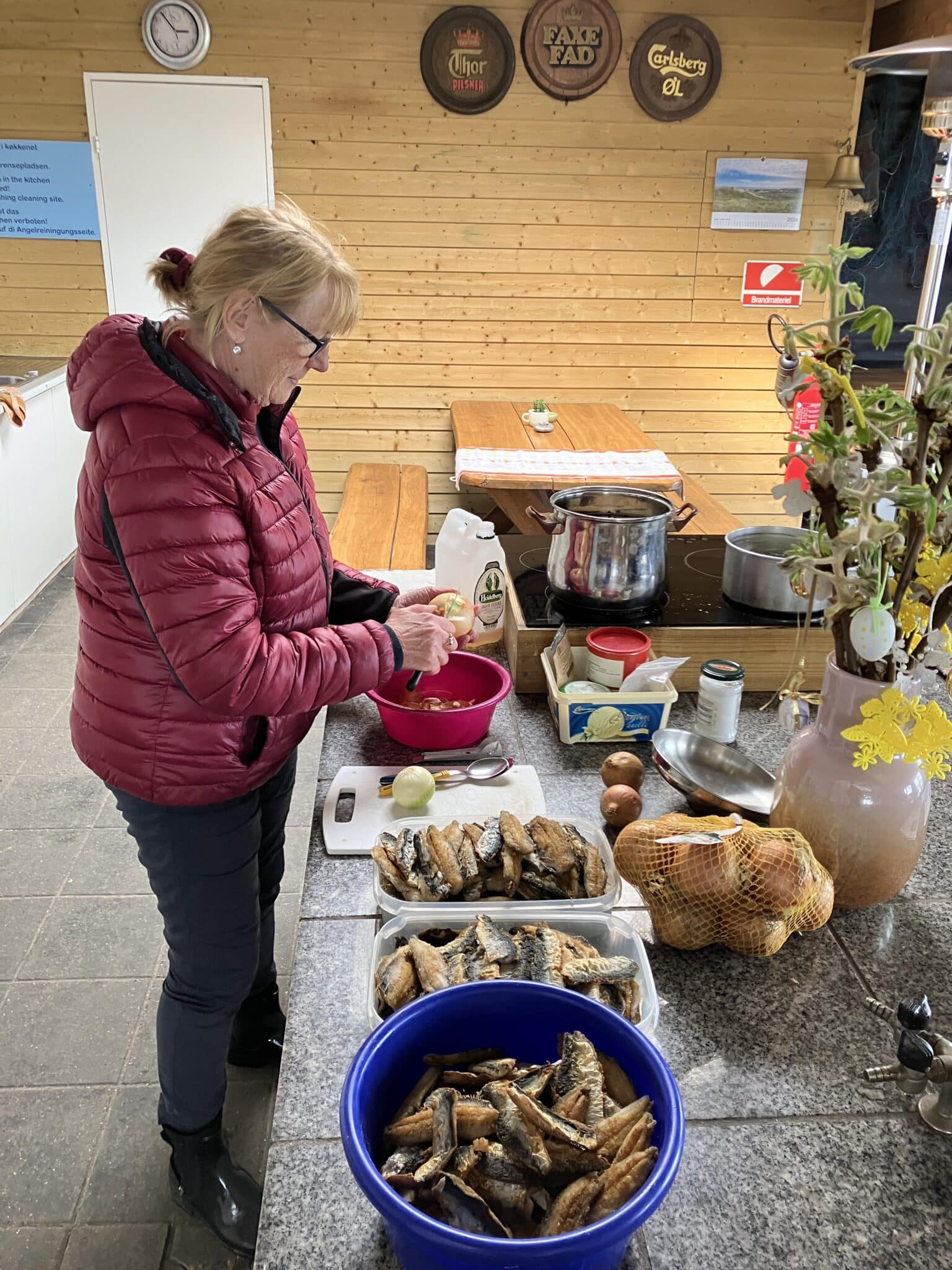
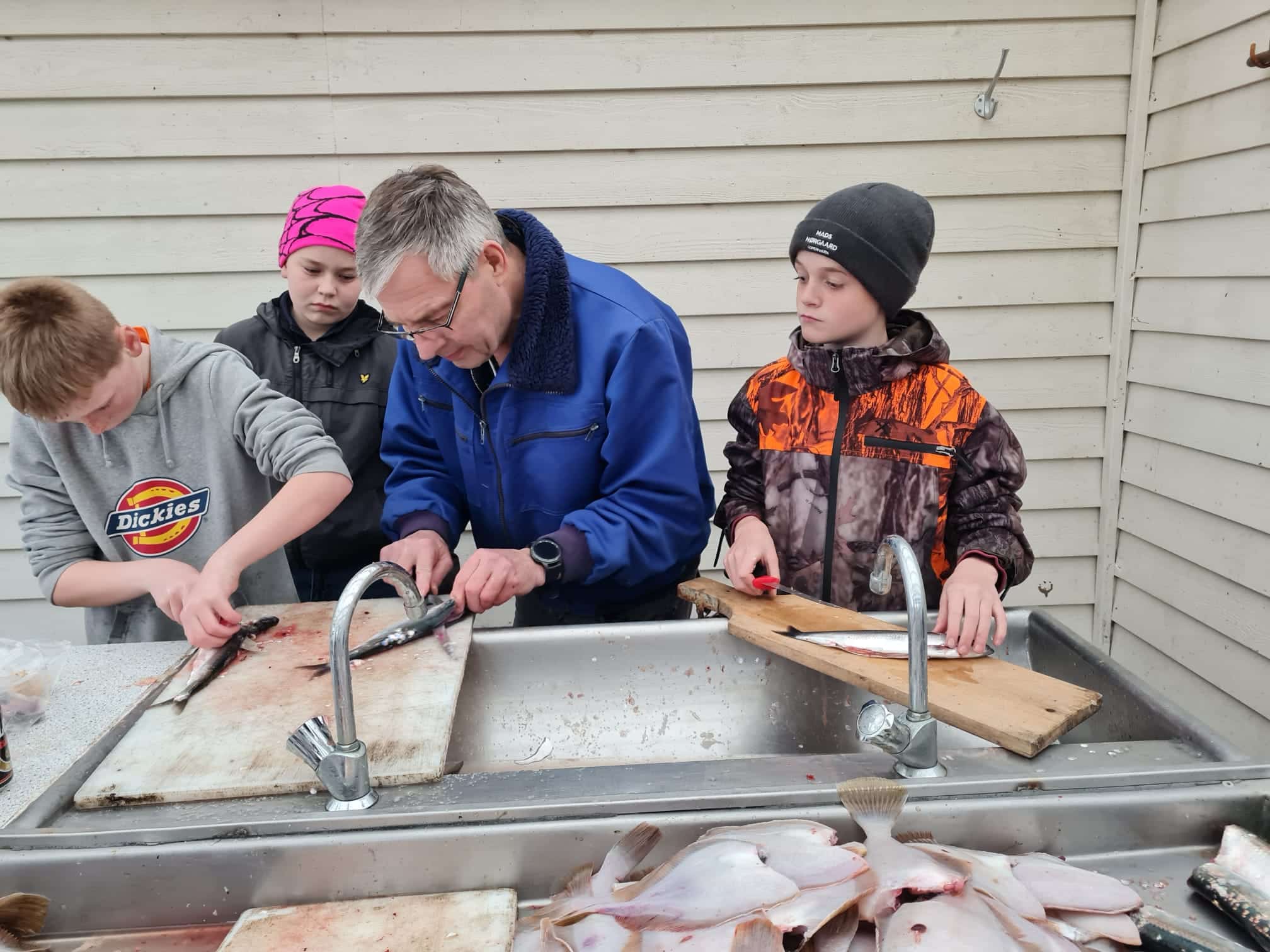
Close to the campsite, located right on the North Sea between Ringkøbing and Holstebro and near Thyborøn, you’ll find a wealth of angling opportunities. The beaches, the fjord, and the area’s rivers and lakes offer great diversity in both nature and the catch of many different fish species. You can clean your fish at the fish-cleaning station and then freeze them, while you swap your best fishing stories. If you’re bringing a boat, there’s a slipway in the harbour you can use.
When you visit Thorsminde Camping, you can try your hand at angling and catch salmon, sea trout, brown trout, rainbow trout, eel, flounder, plaice, dab, herring, garfish, mackerel, needlefish, sea bass and turbot, among others. The questions are: when, where, and how?
Use our written guide below and get the answers.
How do you hook the different types of fish?
Herring fishing and fishing for garfish
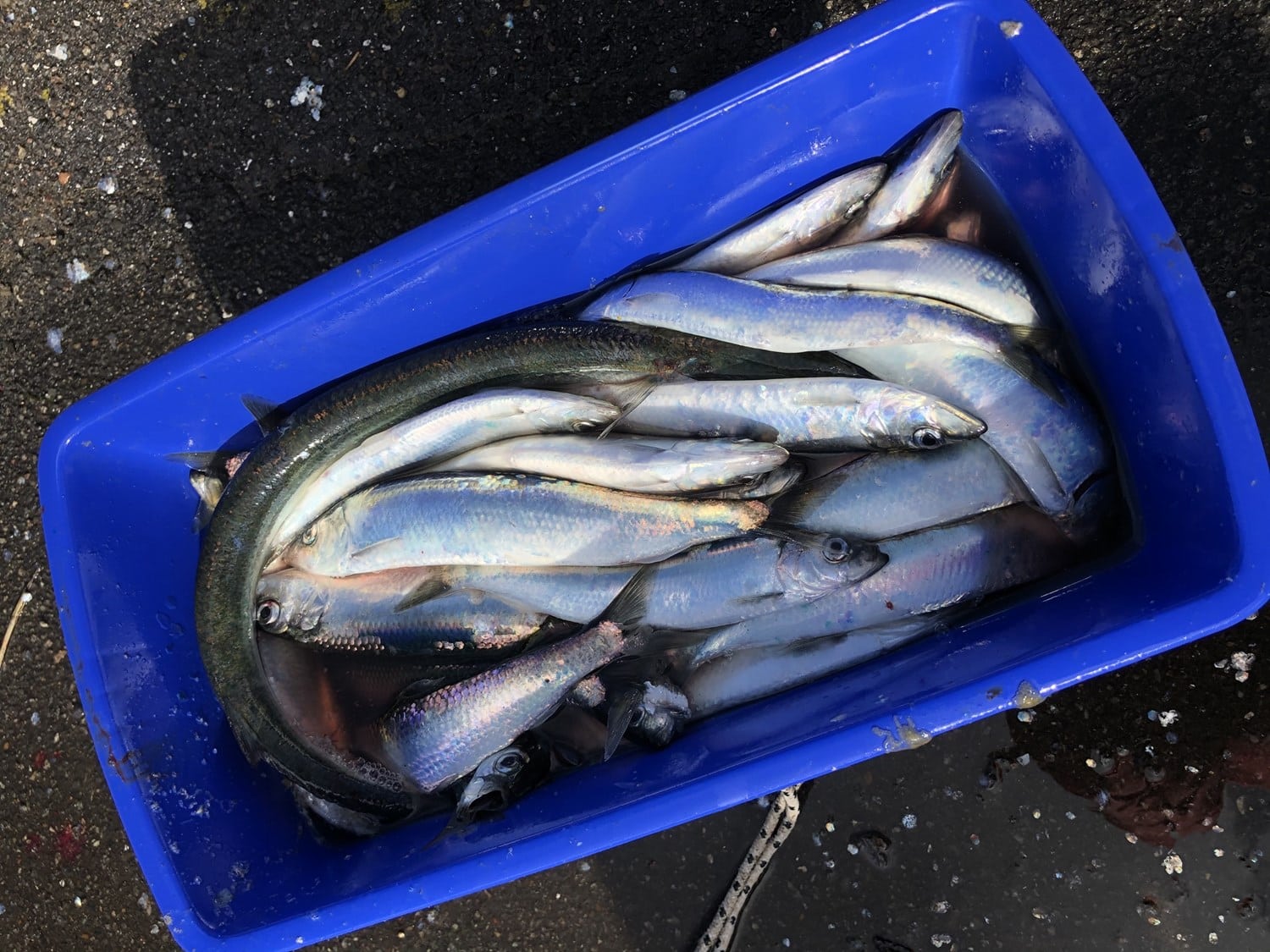
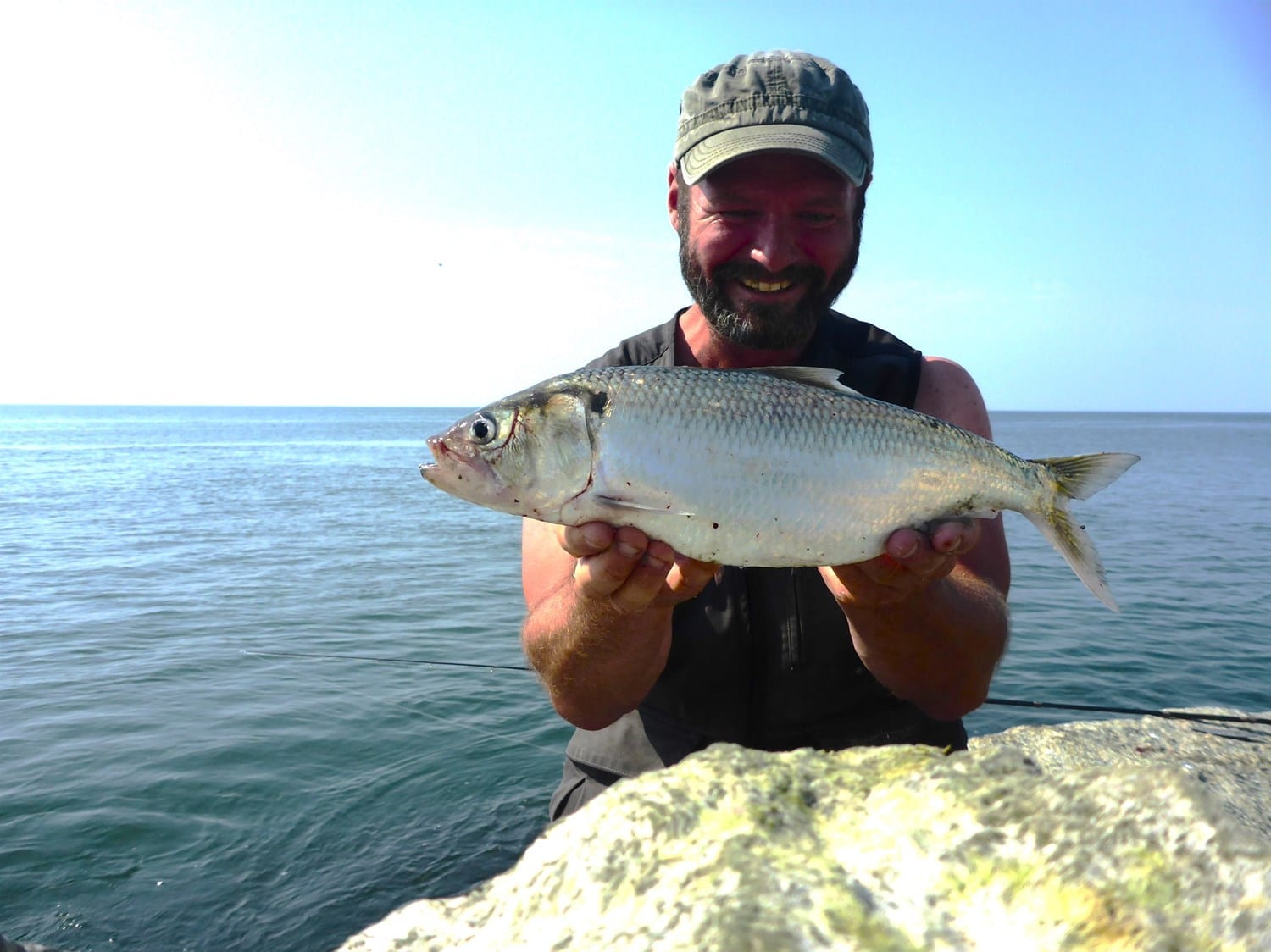
Spring and autumn are, among other things, herring season. You can catch herring from the quay and the pier. Thorsminde Harbour offers several great fishing spots where there are plenty of these tasty fish. The easiest way to catch herring is to use a herring rig. At the end of the rig, you can attach a sinker or a lure. When you use a lure together with the rig, you can catch several fish species in the harbour. Herring are predatory fish and will also strike larger lures on their own.
The garfish is a huge herring that can grow to over 50 cm. Thorsminde Harbour is one of the best places in Denmark to catch them. They are most often caught in the outer half of the harbour, where the water from the fjord and the sluice meets the sea.
The summer season from June through August is best when you want to catch the big fish.
You can use lures, coastal wobblers, and soft plastics—also called shads—to catch garfish. Garfish will also strike pieces of herring, whole shrimp, and mackerel and herring rigs. This is a near-omnivorous predatory fish.
Angling for needlefish
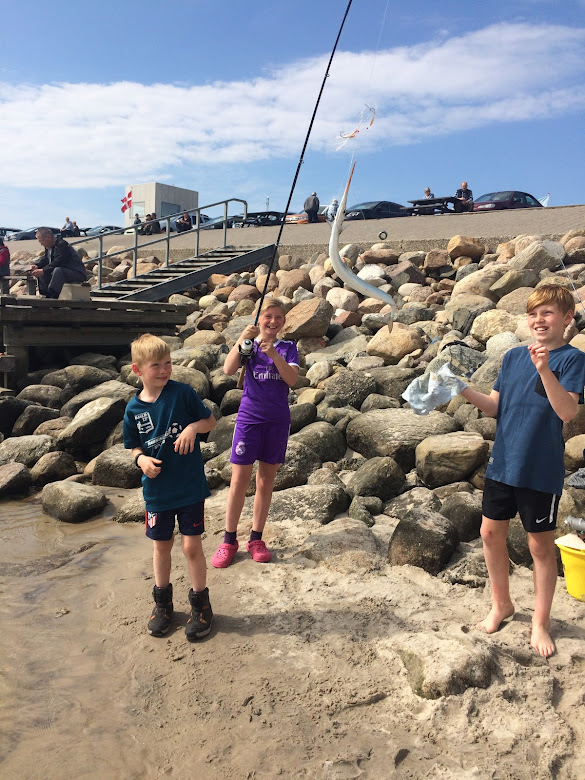
Needlefish can be caught in the harbour on both sides of the sluice and from the area’s beaches. In peak season, there can be several thousand needlefish in the area.
Like herring fishing, angling for needlefish is something the whole family can join in on.
From around April through May is usually peak season. Even so, most years also offer good fishing for these long-beaked fish throughout the summer.
Needlefish can be caught on almost anything. However, lures and using a float with a piece of herring are among the most effective methods in Thorsminde Harbour and the surrounding area.
Angling for flatfish
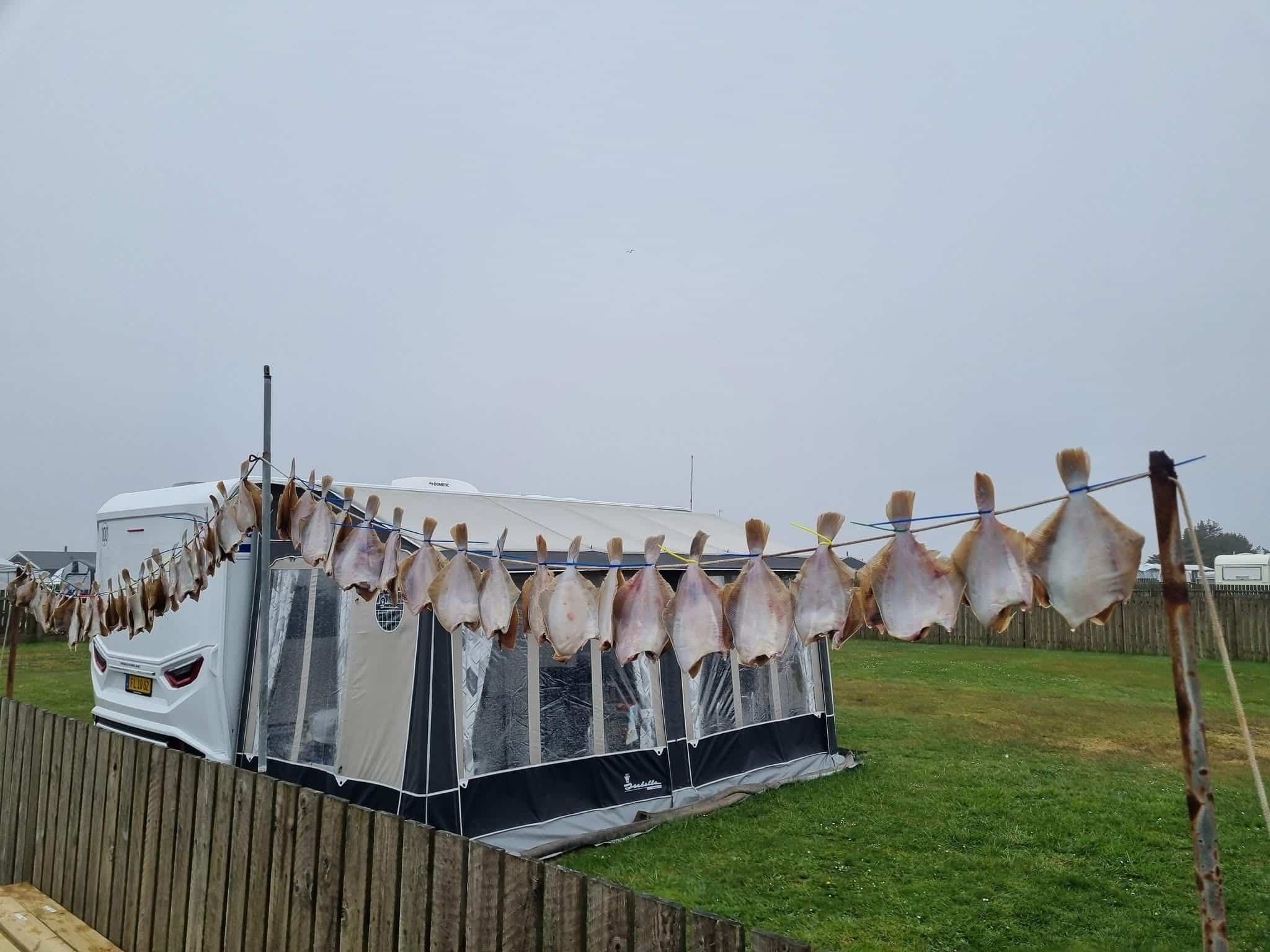
From the inside of the sluice and all the way out to the sea are the spots where the many flatfish species can be caught. Turbot are easiest to catch from the beaches. Flounder are caught both in the harbour area close to the sluice on both sides and from the beaches. Plaice and dab are most often caught from the outer part of the harbour and from the beaches.
Flounder can be caught year-round. Plaice and dab are easiest to catch in the summer season.
The seasons for turbot are spring and autumn. Fishing typically starts around March/April and runs through May.
Autumn offers excellent angling for the big flatfish from around September until the end of October.
For angling for flounder, plaice and dab, you can use a rig with 2 hooks and a sinker. On the hooks you can use common earthworms, lugworms or ragworms.
Turbot are a bit harder to catch. You often need to fish actively for them along the beaches. That is, for example, you have a lure at the end of a rig with 2 hooks. On the 2 hooks, you typically put half a sandeel on each (tail end) or a soft plastic that looks like a sandeel, etc. You shouldn’t put anything on the hook on the lure. Turbot will also happily strike the lure as it is. For that reason, you can also simply fish with a lure or a coastal wobbler without a rig. These should also be fished slowly along the bottom. Effective colours: silver/green, white/green or pure silver.
You should cast the rig and lure out over the cleanest, sandiest areas. Then retrieve slowly along the bottom. Do this metre by metre along the beach. The more water you cover off the beach, the greater the chance of finding and catching a turbot.
Mackerel fishing
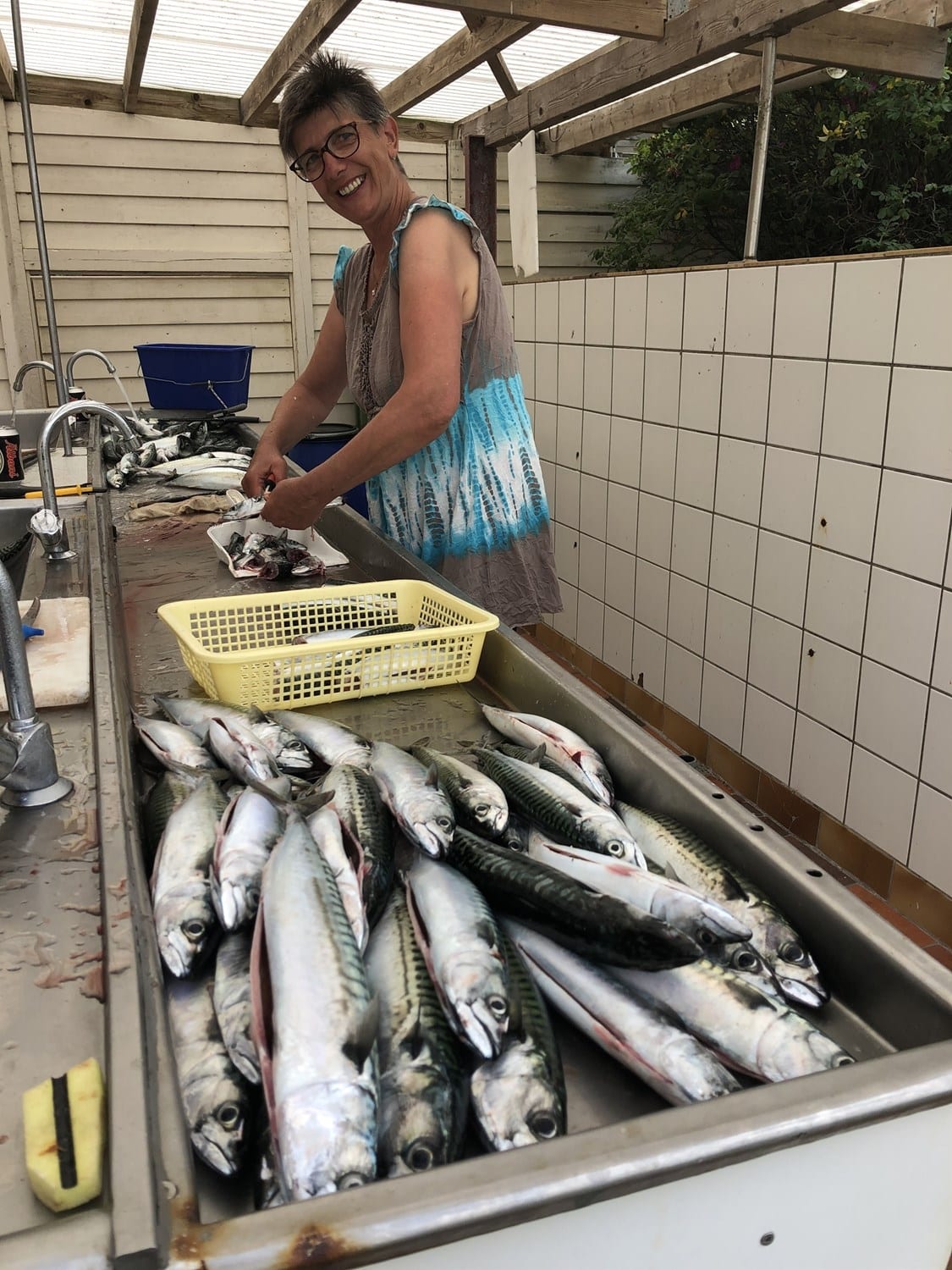
Mackerel can be caught from the outside of the sluice and all the way out to the sea. When there are thousands of mackerel, you can catch the most inside the harbour area. Still, you should never underestimate mackerel fishing from the beaches and stone piers.
The mackerel season varies quite a bit. In general, you can say the chances are fairly good from June through September. Peak season can vary, so there’s only one thing to do: go down and fish and take your chance. It only takes 5 minutes to walk to the north side of the harbour from the campsite, where one of the best fishing spots is.
To catch mackerel, a mackerel rig with a lure at the end is used. But just like when catching needlefish, you can also use a float and a piece of herring when you want to catch mackerel.
Eel fishing
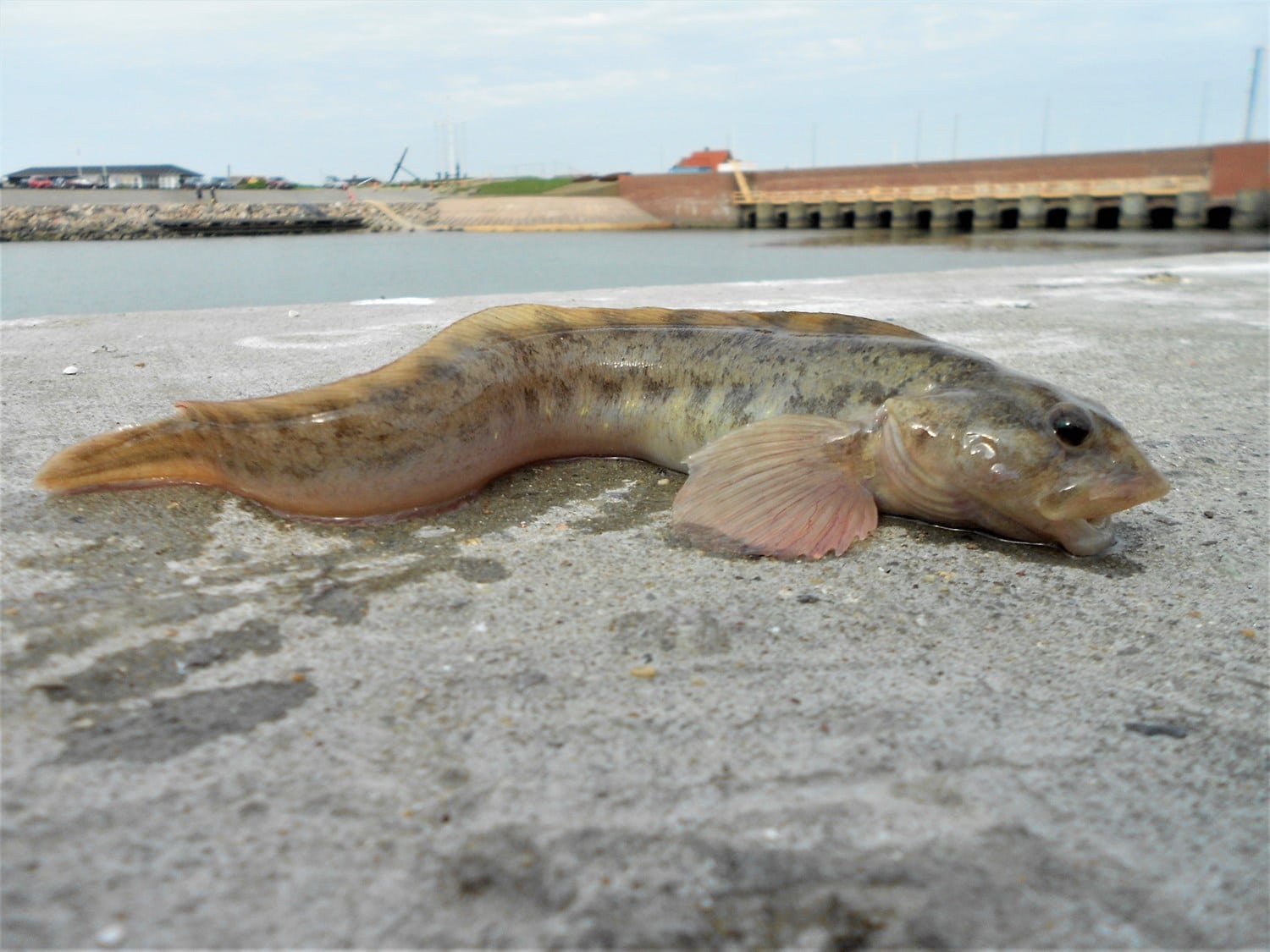
There are both eels and eelpout in Thorsminde Harbour. Eels can be caught everywhere in the harbour area. They are easiest to catch in the evening and at night. Fishing can be good both on the inside and the outside of the sluice—regardless of whether it’s the north or south side.
From May through September, there are both eels and eelpout to be caught in the harbour.
A rig with earthworms, ragworms or lugworms is recommended. Use a standard sinker at the end.
Sea bass fishing
Sea bass are an exciting seasonal fish. They can grow up to 10 kg. Sizes like that haven’t been caught here in Denmark yet, but who knows—maybe one day. In Denmark, sea bass over 8 kg have been caught unofficially, as well as quite a few over 6 kg.
Besides being able to grow large, sea bass taste excellent. They can be caught around the harbour entrance/exit and from the beaches. Sea bass fishing is best from June through September.
A lure in silver, black/blue/silver or silver/blue is the most effective.
Angling for rainbow trout
Rainbow trout are caught in put-and-take lakes. They are stocked regularly, and for a larger or smaller fee you can fish for them. Some fishing lakes/put-and-take lakes have a limit on how many you may catch, and others do not. Close to Thorsminde Camping, there are several lakes to choose from.
Bøvling Put and Take, Bækmarksbro Put and Take, Oxriver and, best known of all, Loch Nees Put and Take.
There are countless methods you can use to catch rainbow trout. Read about some of them here.
Angling for brown trout, sea trout and salmon
Streams with brown trout are not in short supply in the area. Some are relatively close to the campsite.
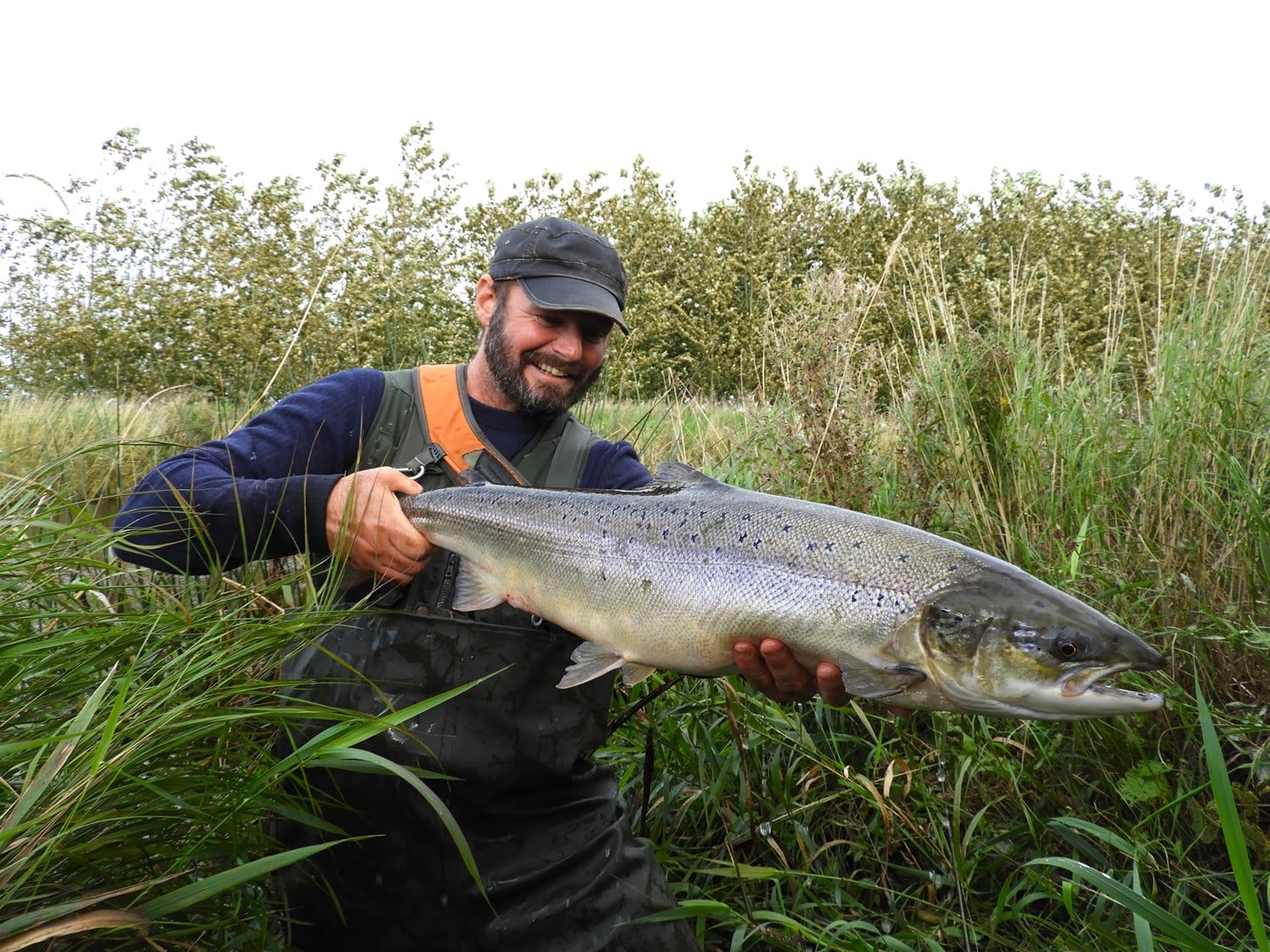
Flynder Å and Storå are the nearest options, and Storå also offers great sea trout and especially salmon fishing. Denmark’s longest salmon was caught in Storå (141 cm).
There’s a lot to learn when fishing in Denmark’s rivers. The same applies to the rivers close to Thorsminde Camping.
Fishing permits can usually be purchased here.
You can read about the rules for salmon fishing and more in Storå here.
Rules, fishing permits and important information
Fishing licence: A fishing licence is required from age 18 through 67, or if you can prove that you are a pensioner earlier.
Minimum sizes and closed seasons: You should always be aware that there are rules for how big the different fish must be to be kept, as well as when they may be caught. Read more about it here.
If you’d like a fishing guide, you can book one here.
Tight lines with your angling near Thorsminde Camping.
Hurry and book a cabin so you can enjoy your fishing experience in Thorsminde